


Affordable smartphones keep getting better every year. Phones like the OnePlus 12R and Google Pixel 8A show that you no longer need to spend flagship-level money to get a device with strong performance, a capable camera system, and a large, high-quality display.
The best phones under $500 now include features once reserved for $1,000-plus devices, such as fast charging, high refresh rate displays, advanced image processing, and multiple years of software and security updates. While compromises still exist at this price point, they’re increasingly minor and rarely affect everyday use.
Here are the best sub-$500 phones we’ve tested and reviewed.
Best Phone Under $500 Overall
Google Pixel 8A
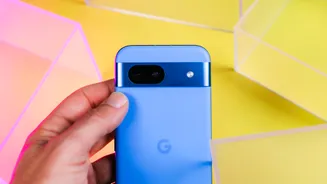
The Google Pixel 8A sets the benchmark for what a $500 phone should deliver. It offers an experience remarkably close to the more expensive Pixel 8, making it difficult to justify spending extra.
Powered by Google’s Tensor G3 processor, the Pixel 8A supports the same AI-powered features found on higher-end Pixel models, including Circle to Search. It features a 120Hz display, wireless charging, and a strong dual-camera system with a 64MP main sensor and a 13MP ultrawide camera.
Google also promises an industry-leading seven years of software and security updates, making the Pixel 8A one of the most future-proof phones in its price range.
Pros
- Excellent camera performance
- Seven years of updates
- Smooth performance with Tensor G3
- Wireless charging
Cons
- 256GB storage not available on all variants
- Zoom and low-light shots trail pricier Pixel models
Decent Midrange Phone With Useful Extras
OnePlus 12R
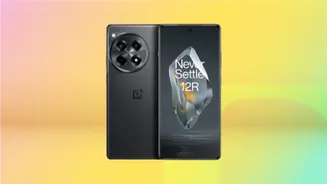
The OnePlus 12R isn’t the cheapest phone in this category, but it offers strong overall performance and standout charging speeds. Its 80W fast charging can fully recharge the phone in just over 30 minutes, which is rare at this price point.
The phone delivers smooth performance for gaming and multitasking, and its display includes wet-touch technology, allowing accurate input even in rain. Camera performance is solid but unremarkable, and the lack of wireless charging is noticeable.
Software support is shorter than some competitors, which limits its long-term appeal.
Pros
- Very fast charging
- Solid performance
- Good battery life
Cons
- No wireless charging
- Shorter software support window
Best Phone for Smaller Hands
Apple iPhone SE (2022)
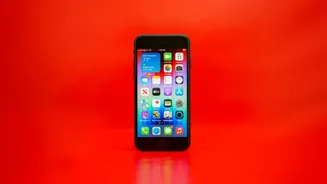
The iPhone SE (2022) remains a strong option for users who prefer smaller phones. It combines Apple’s powerful A15 Bionic chip with a compact 4.7-inch design, Touch ID, and solid camera and video performance.
While its design feels dated and it lacks modern features like Night mode photography and a full-screen display, performance remains excellent. Apple’s long-term software support also makes it a dependable choice.
Pros
- Strong performance
- Compact size
- Excellent video recording
- Long software support
Cons
- Outdated design
- No Night mode
- Dimmer display
Best Android Phone When On Sale
Google Pixel 7A
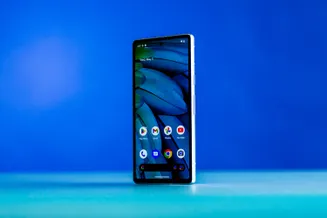
When discounted below $500, the Pixel 7A remains an excellent value. It shares many features with the Pixel 7, including Google’s Tensor G2 processor and an excellent camera system that performs well in both daylight and low-light conditions.
It also introduced wireless charging to Google’s budget lineup, though its display can struggle outdoors and software support is shorter than the newer Pixel 8A.
Pros
- Excellent camera quality
- Clean Android experience
- Wireless charging
Cons
- Dim display outdoors
- Shorter update commitment than Pixel 8A
What to Consider When Buying a Phone Under $500
Phones in this price range may still involve trade-offs in areas like camera versatility, charging features, or long-term update guarantees. Many are best used for three to four years, depending on the manufacturer’s support policy.
It’s also worth watching for discounts and carrier deals, which can significantly reduce prices — sometimes making higher-end models affordable.
How We Test Phones
Each phone is tested through real-world use, focusing on display quality, performance, battery life, camera capabilities, and everyday reliability. Cameras are evaluated across different lighting conditions, while battery life is measured during typical daily use.
Our recommendations balance performance, features, and long-term value against price — so you know exactly what you’re getting.












Leave a comment