

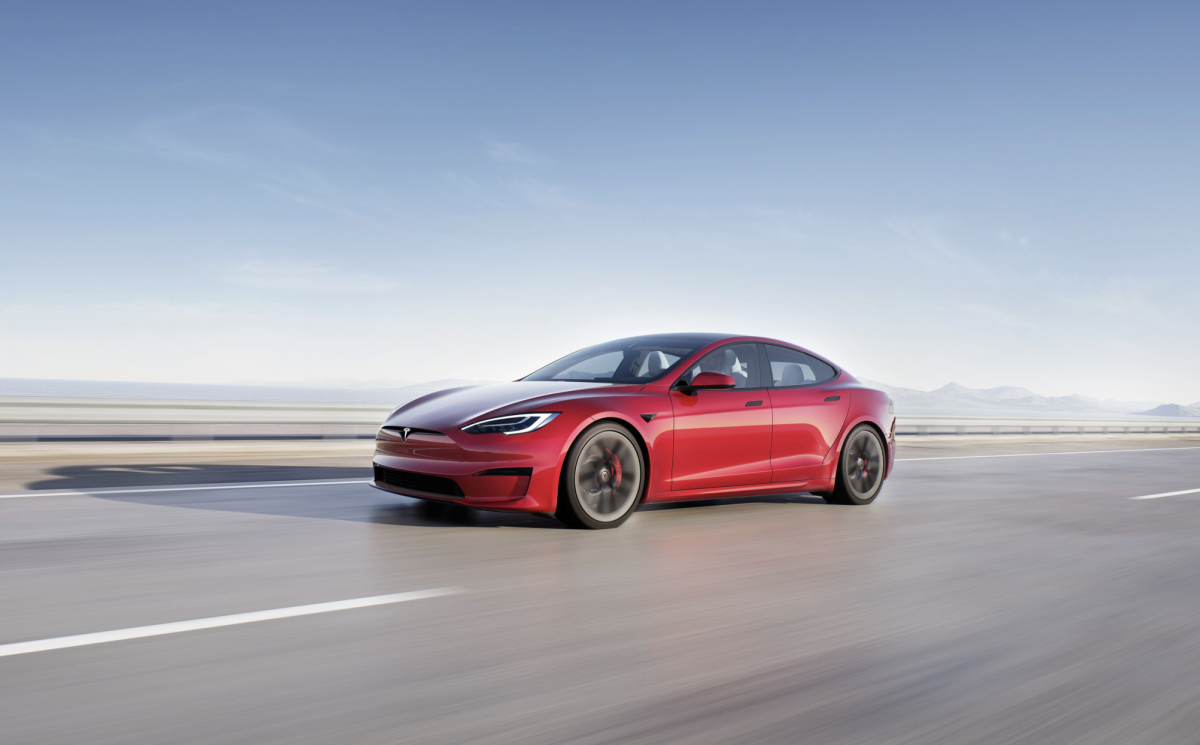
Tesla will wind down production of the Model S sedan and Model X SUV, CEO Elon Musk announced during the company’s latest earnings call.
Musk said Tesla will build its final units of both vehicles next quarter, while continuing to provide long-term support for existing owners. “We’ll support Model S and X owners for as long as they own the cars,” he noted.
Calling the move an “honorable sendoff,” Musk said the decision reflects Tesla’s shift toward a future centered on autonomy and robotics. He added that customers interested in either model should place orders soon.
Both vehicles are currently built at Tesla’s Fremont, California factory, which Musk said will be repurposed to support production of the company’s Optimus humanoid robots once Model S and X manufacturing ends. Production of the Cybertruck, made at Tesla’s Texas facility, will continue.
Introduced in 2012, the Model S is widely credited with helping electric vehicles break into the mainstream. The Model X followed a few years later as Tesla’s second major vehicle line. Over time, however, Tesla increasingly positioned the Model 3 and Model Y as its core growth drivers, with those more affordable models far outselling the premium S and X.
Sales of the two flagship vehicles have slowed in recent years despite multiple updates, as Tesla faces growing competition in the luxury EV segment from both traditional automakers and newer entrants like Rivian and Lucid.
The legacy of the Model S
Although the original Roadster was Tesla’s first car, the Model S was the company’s first clean-sheet design. Its floor-mounted battery pack improved interior space and handling, while multiple battery options allowed buyers to pay extra for longer range.
Demand was strong from the start, with more than 10,000 reservations placed before deliveries began in mid-2012. In 2013, the Model S won MotorTrend’s Car of the Year, outperforming gasoline-powered rivals. Over the years, Tesla introduced features like software-locked batteries, “Ludicrous Mode” acceleration, and continuous performance and range upgrades, followed by a major redesign in 2021.
A more complicated journey for the Model X
The Model X faced a rockier path. First teased in 2012, it didn’t reach customers until 2015. Its signature Falcon Wing doors set it apart but also caused manufacturing headaches. Musk later described the SUV as the “Fabergé egg of cars,” highlighting both its appeal and its complexity.
While the Model X sold reasonably well and received a refresh in 2021, production challenges persisted. Musk later admitted Tesla erred by pausing production before the redesigned version was ready to scale.
An expected farewell
In retrospect, the end of the Model S and X had been looming for years. Musk said in 2019 that Tesla continued building them largely for sentimental reasons, calling them “of minor importance” to the company’s future.
Even so, the vehicles remained part of Tesla’s lineup as attention shifted to newer projects like the Cybertruck, which has struggled to meet early expectations. As Tesla increasingly prioritizes self-driving technology and robotics, the decision to retire its original flagship models appears inevitable.
While no longer central to Tesla’s long-term strategy, the Model S and Model X remain foundational to the company’s rise—and to the broader acceptance of electric vehicles worldwide.










Leave a comment