

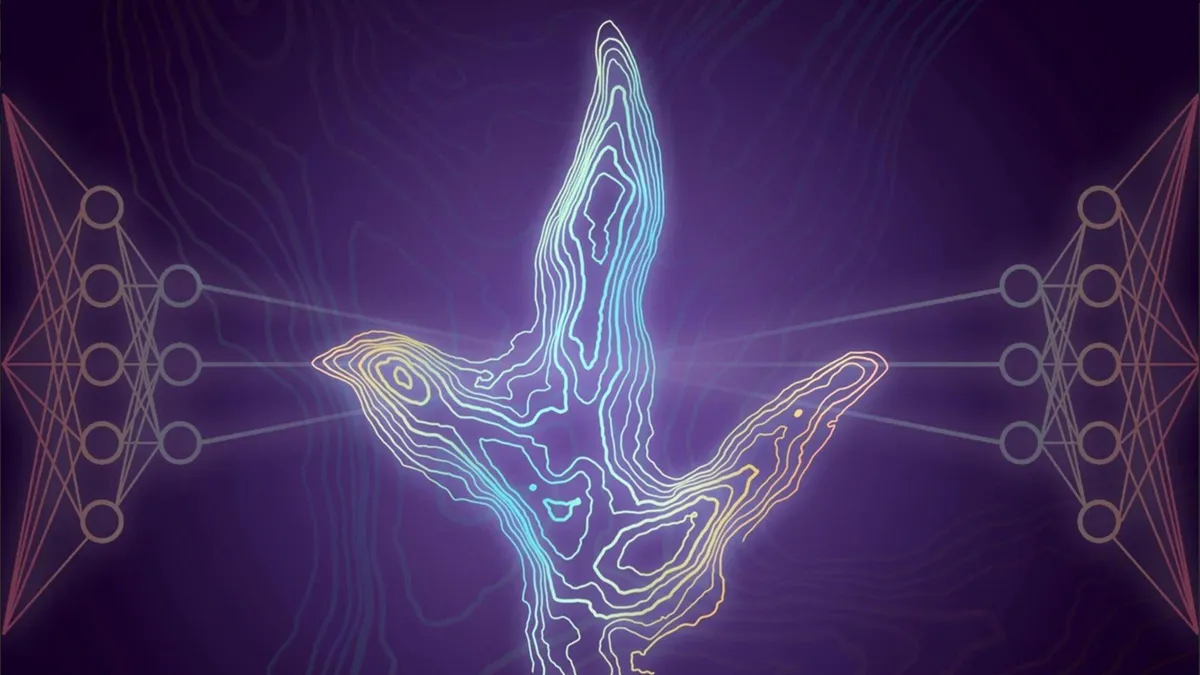
An international research team has developed a cutting-edge AI tool capable of identifying dinosaur footprints in seconds. The app, called Dinotracker, uses artificial intelligence to analyze fossilized tracks and determine which dinosaurs most likely made them.
The project is a collaboration between Germany’s Helmholtz-Zentrum research center and the University of Edinburgh in Scotland, with the findings published this week in Proceedings of the National Academy of Sciences.
Identifying dinosaurs from footprints has long been a challenge. Tracks are often hundreds of millions of years old and preserved in rock layers that have shifted, eroded, or deformed over time. In addition, scientists still lack complete knowledge of many dinosaur species, making footprint identification subjective and, at times, disputed.
To reduce human bias, the research team developed an algorithm designed to analyze footprints objectively. “We bring a mathematical, unbiased perspective to help experts interpret the data,” said Gregor Hartmann, the project’s lead researcher at Helmholtz-Zentrum.
The AI was trained using thousands of real fossil footprints along with millions of simulated examples that replicate natural distortions such as compression, erosion, and shifting edges. It focuses on eight key footprint characteristics, including toe width, heel placement, surface contact area, and weight distribution.
By comparing new tracks against known fossils, Dinotracker estimates which dinosaur was most likely responsible for creating them. When tested against classifications made by human experts, the AI matched their conclusions about 90% of the time.
Notably, the system is entirely unsupervised, meaning it was not trained using predefined labels such as “theropod” or “ornithopod.” Instead, it independently learned patterns and was only compared with human classifications after training was complete.
Beyond identification, the tool has already produced intriguing insights. When analyzing footprints more than 200 million years old, Dinotracker detected strong similarities between ancient dinosaur tracks and the foot structures of extinct and modern birds. This raises the possibility that birds may have emerged earlier than previously believed, although researchers caution that footprints alone are not enough to rewrite evolutionary history without skeletal evidence.
Hartmann emphasized that many factors can alter footprints over time, ranging from the moisture content of the mud to long-term erosion — which is precisely why an objective AI-based approach is valuable.
Dinotracker is available for free on GitHub, though it requires some technical expertise to operate and is not yet packaged as a simple download-and-use application.












Leave a comment